

Inside Airline Pilot Training for Modern Aircraft
Date Published
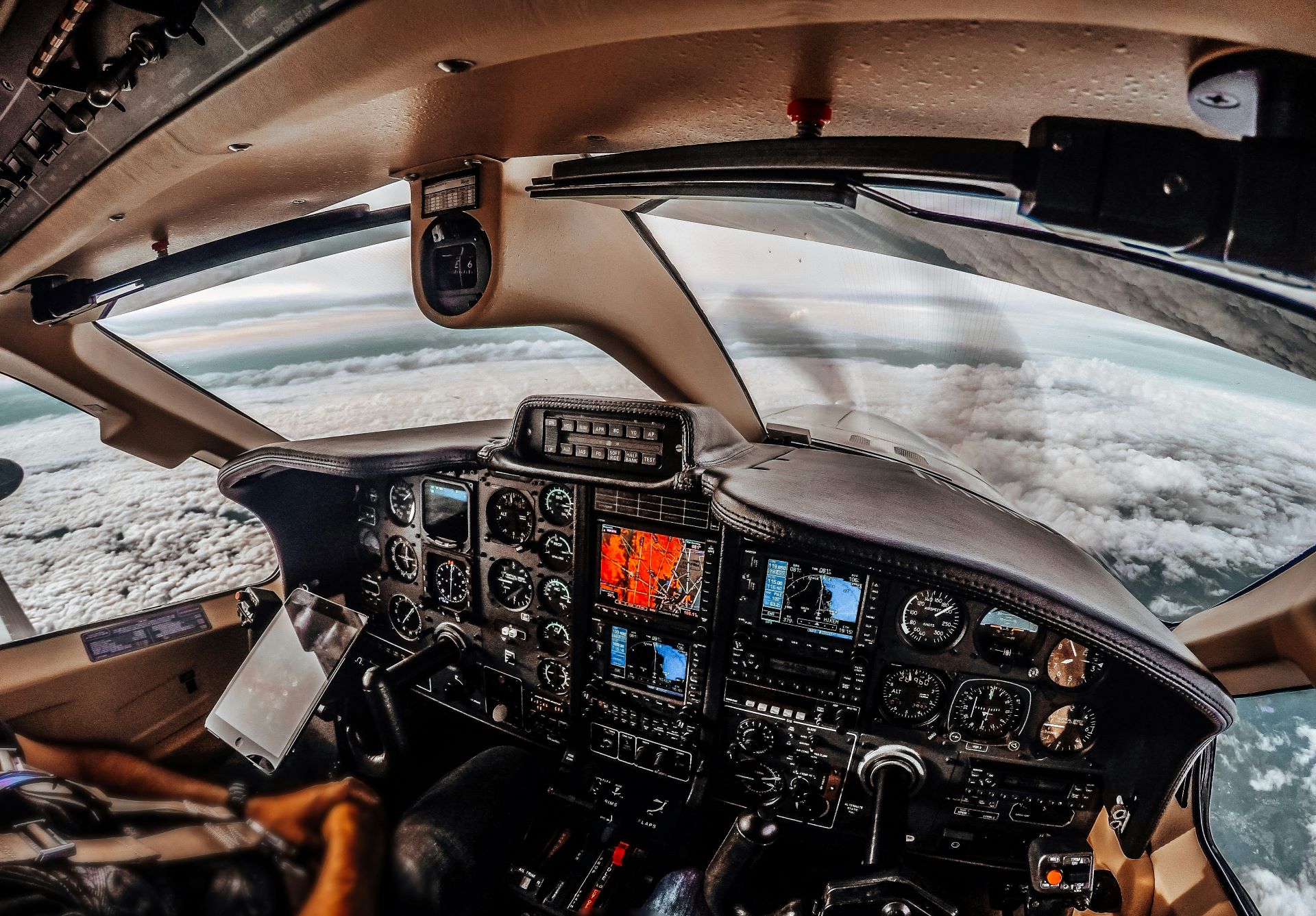
Modern commercial aviation looks effortless from the passenger seat, but behind every smooth takeoff is a training ecosystem so precise it resembles a choreography performed inside a machine made of regulation, repetition, and relentless simulation. Airline pilots today are not simply taught to fly an aircraft; they are trained to operate one of the most complex, automated, and safety-critical systems ever built.
The journey from aviation student to airline captain is no longer defined by time in the air alone. Instead, it is shaped by simulator hours, certification milestones, regulatory benchmarks, and continuous reassessment. At the center of it all sits the flight simulator, a hyper-realistic cockpit replica where pilots rehearse everything from routine departures to catastrophic failures that would be too dangerous to practice in real life.
This is the world of modern pilot training: structured, data-driven, and intensely simulator-heavy, where every decision is measured and every skill is tested under pressure.
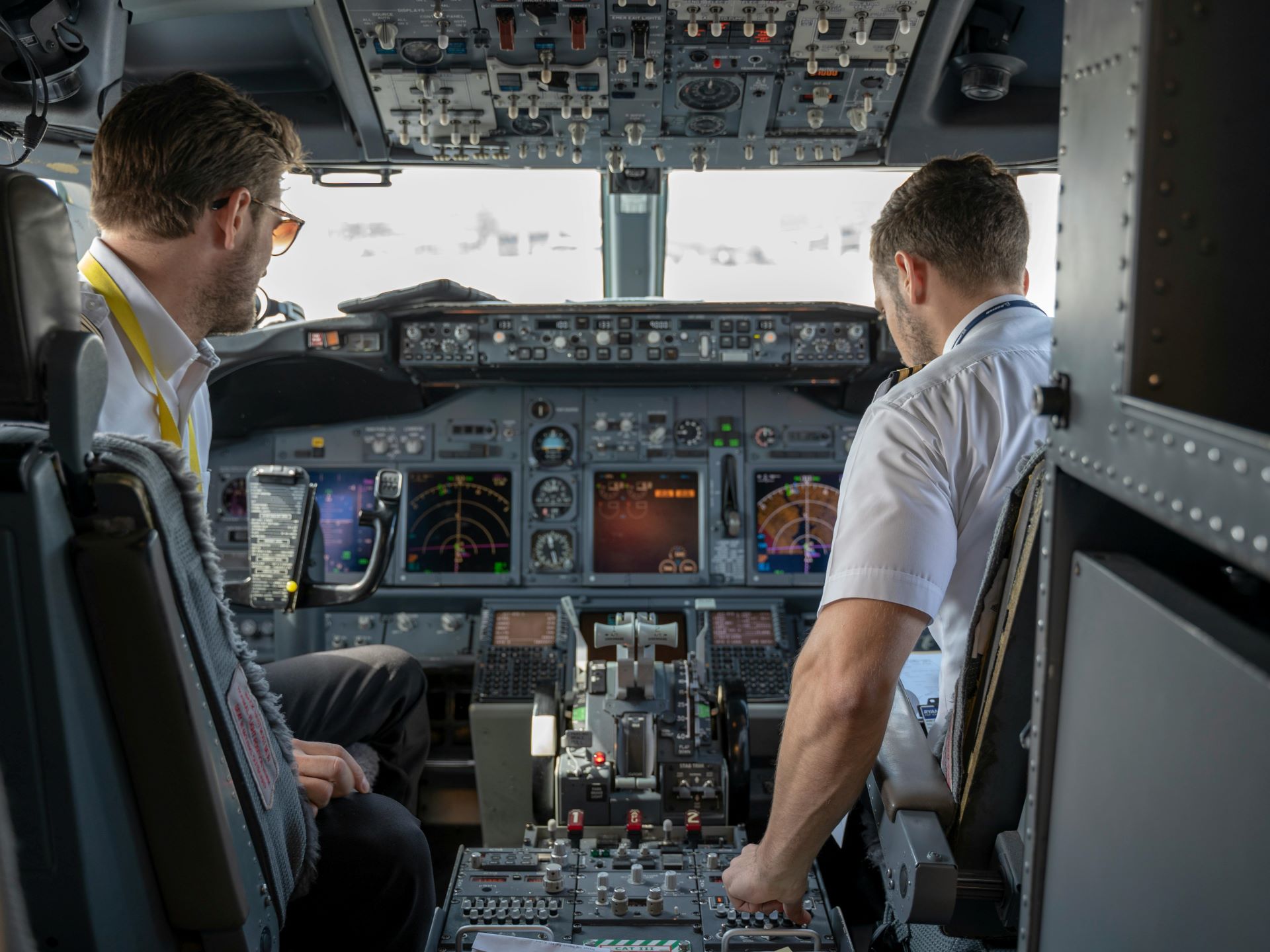
The Modern Training Philosophy: Precision Before Presence
Airline pilot training has evolved dramatically from the early decades of commercial flight. In the past, pilots accumulated experience primarily through actual flight hours. Today, regulators and airlines have shifted toward a blended model that prioritizes simulated experience before real-world exposure.
The philosophy is simple but powerful: exposure to risk should be controlled, repeatable, and measurable.
Training programs are designed around competency rather than just hours flown. A pilot must demonstrate mastery of specific skills, from manual aircraft handling to automated system management, before advancing to the next stage. This ensures consistency across global fleets, regardless of aircraft type or airline.
At the heart of this philosophy is one truth: modern aircraft are less about “flying” and more about managing systems that fly themselves.
The Certification Pipeline: From Student to Airline Cockpit
Becoming an airline pilot involves a structured progression governed by strict regulatory authorities such as the FAA in the United States and EASA in Europe. While regional differences exist, the overall pipeline is globally consistent.
The journey typically begins with foundational flight training, where student pilots learn basic aerodynamics, navigation, and manual aircraft control. After earning a private pilot license, they move toward commercial certification, followed by instrument ratings that allow them to fly in low-visibility conditions.
From there, aspiring airline pilots enter the most intensive phase: airline transport pilot training and type rating certification.
A type rating is essentially a license to operate a specific aircraft model. A pilot certified on an Airbus A320, for example, cannot automatically fly a Boeing 787. Each aircraft has unique systems, flight characteristics, and automation logic that require dedicated training.
This pipeline is highly standardized, ensuring that by the time a pilot reaches a commercial cockpit, they have been tested under dozens of scenarios designed to mirror real-world airline operations.
Flight Simulators: The Heart of Modern Training
If there is a single place where airline pilots are truly made, it is the full flight simulator.
These machines are not simple training tools. They are engineered replicas of real cockpits mounted on motion platforms that replicate turbulence, acceleration, and environmental forces. Visual systems project high-resolution environments that mimic airports, weather systems, and terrain with remarkable precision.
Inside a simulator, pilots can experience conditions that would be unsafe or impossible to replicate in real life. Engine failures during takeoff, hydraulic system malfunctions, sudden depressurization, and extreme weather scenarios are all part of routine training cycles.
What makes simulators particularly powerful is their repeatability. A training instructor can pause a scenario, reset conditions, or repeat a failure until the crew demonstrates perfect response execution.
This controlled environment allows airlines to build muscle memory for emergency procedures without exposing passengers or aircraft to risk.
Why Simulators Have Replaced Most Real-World Training Hours
Modern regulations allow a significant portion of pilot training hours to be completed in simulators rather than in the air. This shift is driven by three key advantages.
First, cost efficiency. Operating a commercial aircraft is expensive, and using it for repetitive training scenarios is impractical.
Second, safety. Simulators eliminate risk while allowing exposure to extreme conditions that would be too dangerous in real flight.
Third, precision. Every input, reaction time, and procedural step can be recorded, analyzed, and improved.
This data-driven feedback loop is one of the most transformative elements of modern aviation training. Instructors can identify subtle performance gaps, such as delayed responses during autopilot disengagement or inefficient communication during emergency protocols.
Type Rating: Learning a New Aircraft from Scratch
The transition from general pilot certification to aircraft-specific qualification is one of the most intense phases of training. Known as type rating, this stage focuses entirely on mastering a single aircraft model.
Pilots learn cockpit layouts, automation systems, flight management computers, engine control systems, and emergency protocols unique to that aircraft.
Modern aircraft such as the Airbus A350 or Boeing 787 are highly automated, meaning pilots spend as much time managing digital systems as they do physically controlling the aircraft.
Type rating programs typically combine simulator sessions with classroom instruction and supervised flight experience. The goal is not just familiarity but instinctive response under pressure.
A pilot must be able to interpret system alerts, reconfigure flight paths, and manage abnormal conditions without hesitation.
Crew Resource Management: The Human System in the Cockpit
While technology dominates modern aviation, human coordination remains critical. Crew Resource Management (CRM) training ensures that pilots, co-pilots, and cabin crew operate as a unified decision-making system.
CRM focuses on communication clarity, role distribution, situational awareness, and conflict resolution inside the cockpit. It acknowledges a fundamental truth: most aviation incidents are not caused by mechanical failure alone but by human factors interacting with complex systems.
Training scenarios often simulate high-stress environments where communication breakdowns could occur. Pilots are evaluated not just on technical execution but on how effectively they coordinate under pressure.
This human systems training is one of the most important safeguards in commercial aviation.
Simulator Scenarios: Where Reality Is Rewritten
Inside a simulator, reality becomes flexible. Training instructors can design scenarios that push pilots to the edge of operational limits.
A routine training session might include engine failure at rotation speed, sudden wind shear during landing approach, or multiple system failures cascading simultaneously.
These scenarios are carefully designed to test decision-making hierarchies. Pilots must prioritize actions, delegate responsibilities, and maintain situational awareness while under cognitive load.
What makes these exercises powerful is their unpredictability. Even experienced pilots are regularly challenged with new combinations of failures to ensure adaptive thinking rather than memorized responses.
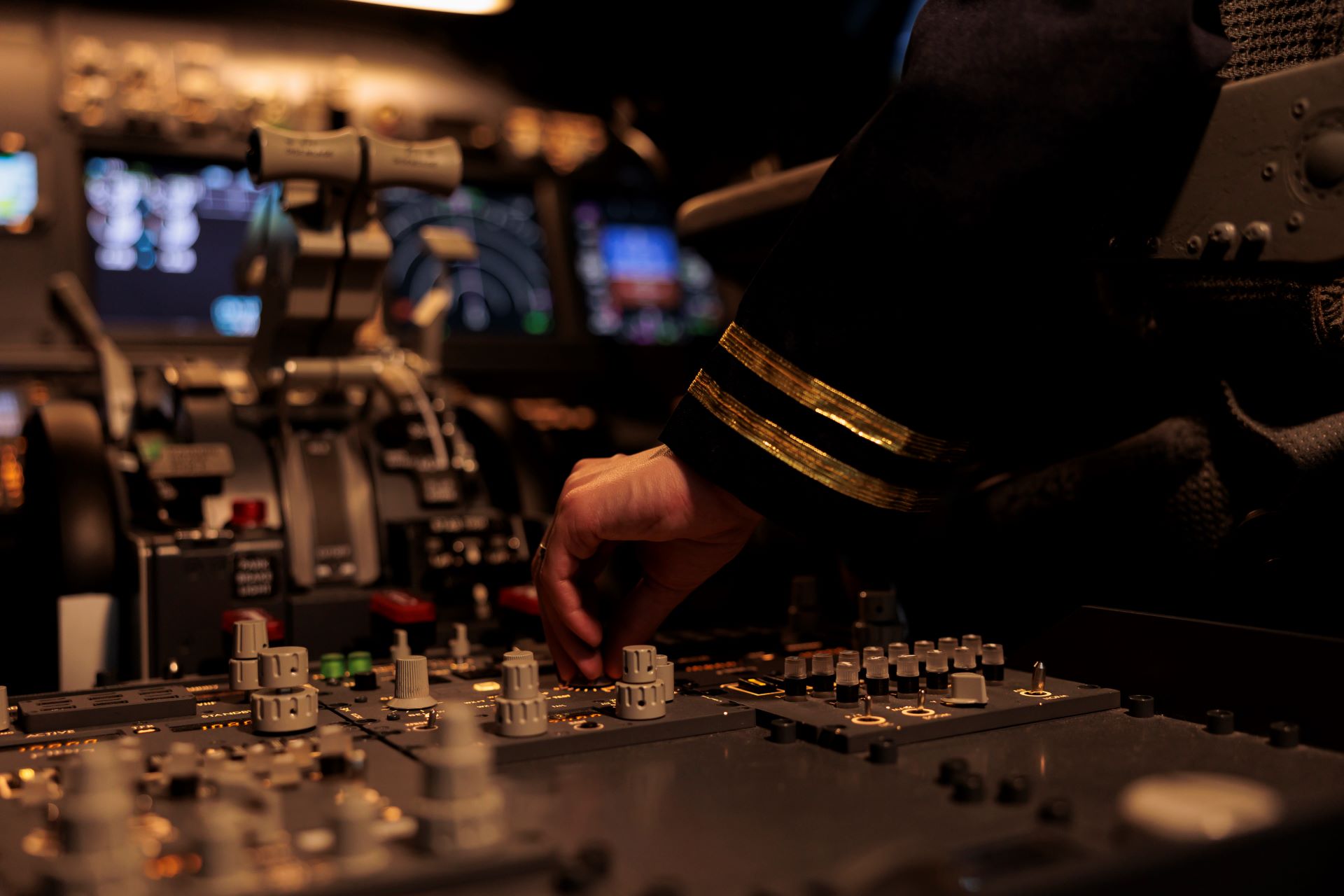
The Role of Automation in Training
Modern aircraft are highly automated, which has fundamentally reshaped pilot training. Autopilot systems, flight management computers, and advanced navigation tools handle much of the routine flying.
This shifts the pilot’s role from direct control to systems oversight.
Training now emphasizes understanding automation logic, recognizing when systems behave unexpectedly, and knowing when to disengage automated systems and revert to manual control.
Pilots must be equally comfortable flying manually and managing digital flight environments. This dual skill requirement is central to modern certification standards.
Recurrent Training: Skills That Never Stop Evolving
Pilot training does not end once certification is achieved. Airlines require recurrent training cycles, typically every six to twelve months, to ensure skills remain sharp and procedures stay current.
These sessions often include simulator assessments, regulatory updates, and emergency procedure refreshers.
Recurrent training is where pilots are re-tested on rare but critical scenarios such as complete electrical failure or emergency landings without navigation systems.
This continuous evaluation system ensures that skills do not degrade over time and that all pilots remain aligned with evolving aviation standards.
Data-Driven Training: The Digital Co-Pilot
Modern simulators generate vast amounts of performance data. Every input, timing decision, and procedural step is recorded and analyzed.
Airlines use this data to refine training programs, identify common errors, and personalize instruction for individual pilots.
If a pilot consistently delays checklist execution or mismanages certain emergency flows, targeted retraining can be implemented.
This data-centric approach transforms training from a fixed curriculum into an adaptive learning system.
From Classroom to Cockpit: The Learning Environment
Although simulators dominate training, classroom instruction remains essential. Pilots must understand meteorology, aerodynamics, navigation theory, aircraft systems, and regulatory frameworks.
However, even classroom learning is increasingly integrated with simulation-based reinforcement.
Concepts are often immediately applied in simulator sessions, bridging theory and practice in real time.
This integration ensures that pilots do not simply memorize procedures but understand their underlying logic.
The Psychology of High-Reliability Training
Airline pilot training is as much psychological as it is technical. Pilots must be trained to remain calm under pressure, make decisions with incomplete information, and maintain focus during prolonged periods of high cognitive load.
Stress exposure training is often incorporated into simulator sessions, where unexpected failures occur during critical phases of flight.
The goal is not to overwhelm but to normalize complexity.
Over time, pilots develop a cognitive framework that allows them to process emergencies as structured problems rather than chaotic events.
Global Standardization: One Sky, One Language
One of the most remarkable aspects of aviation training is its global standardization. Whether a pilot trains in South Africa, Germany, or Singapore, the core principles remain aligned.
This is essential for international operations, where flight crews may come from different countries but must operate seamlessly together.
Standard phraseology, procedural consistency, and shared certification benchmarks ensure that communication and performance remain uniform across borders.
Emerging Technologies in Pilot Training
The future of pilot training is increasingly digital. Virtual reality, augmented reality, and artificial intelligence are beginning to complement traditional simulators.
VR systems allow pilots to rehearse cockpit procedures in immersive environments without full-scale simulator access. AI-driven training systems can analyze pilot behavior and adapt scenarios dynamically.
Machine learning models are also being used to predict performance risks and optimize training schedules.
While these technologies are still evolving, they point toward a future where pilot training becomes even more personalized and responsive.
Safety Culture: The Invisible Framework
Beyond technology and regulation lies the most important element of aviation training: safety culture.
Airlines cultivate environments where reporting errors is encouraged, learning is continuous, and perfection is pursued but not assumed.
Pilots are trained to treat mistakes as learning opportunities rather than failures. This cultural framework is what allows aviation to maintain its extraordinary safety record despite its complexity.
The Science of Trust in the Skies
Modern pilot training is a carefully engineered system designed to produce consistency in one of the most demanding professions on earth.
Through simulators, certification pipelines, data analytics, and continuous evaluation, airlines ensure that every pilot entering a cockpit is not only qualified but resilient, adaptable, and deeply familiar with both the technology and psychology of flight.
When passengers board a plane, they are not just trusting a pilot. They are trusting a vast training ecosystem that has rehearsed almost every possible scenario before the aircraft ever leaves the ground.
It is a system built on simulation, refined by regulation, and sustained by an unwavering commitment to safety.
And somewhere inside a motion-filled simulator, another pilot is learning how to bring calm to chaos before it ever reaches the sky.